

KillGlass

KillGlass is an Advanced, High-Performance Coating Engineered for Glass and Composite Surfaces
Advanced Technology
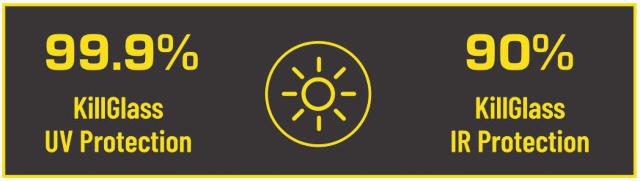
KillGlass blocks 99.9% of harmful UV rays and up to 90% of infrared radiation, reducing surface heat by up to 17°C and in some cases by 50%.
UV is the leading cause of fading and material degradation.* By cutting UV exposure, KillGlass helps preserve colours and extend the life of interiors, furnishings, and displays, whether in vehicles, homes, shops, or galleries.
The Benefits of KillGlass
KillGlass in Action

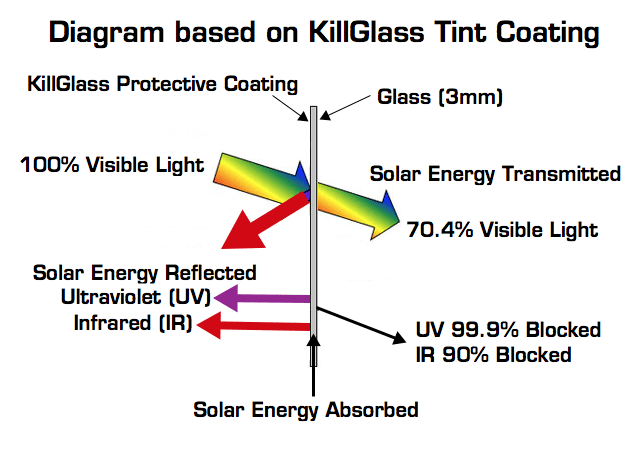

KillGlass Results Explained
Visible Transmittance (VT): The fraction of visible light (380–720 nm) that passes through glass, weighted by human eye sensitivity. Expressed between 0 and 1, higher VT means more daylight. Ideal VT depends on your daylighting needs and glare control.
Total Solar Absorption (60.7%): Energy absorbed by KillGlass.
Total Solar Reflection (5.3%): Energy reflected.
Total Solar Transmission (34%): Energy transmitted.
Note: Absorbed % + Reflected % + Transmitted % = 100%.
Solar Heat Gain Coefficient (SHGC): The fraction of solar radiation admitted through glass, directly or as absorbed/released heat. Expressed from 0–1, lower values mean less heat gain and more shading. KillGlass tested at 0.46, a balanced level between high and low gain.
Shading Coefficient (SC): An older standard now replaced by SHGC. To convert SC to SHGC, multiply by 0.87.
Solar Energy Explained - Reflected/Absorbed/Transmitted
When the sun's radiation reaches a glass surface, it splits into three components: Reflected Energy (RE), which bounces off the surface of the glass; Transmitted Energy (TE), which passes through the glass; and Absorbed Energy (AE), which the glass takes in before later being released as heat or radiation.
TE and RE are typically measured using the Parry Moon/Mass 2 method, covering the 300–2140nm wavelength range to provide an accurate average value.

Watch the LGS KillGlass – UV And IR Reduction Coating Video (opens in new tab)
*Cancer Research UK – Sun Smart.
Enquire About KillGlass
KillGlass is part of the Liquid Glass Shield family of brands
